Fun With Dictation
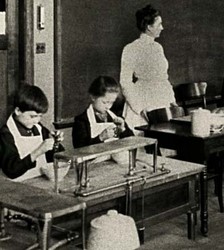 It doesn’t sound like a very nice activity, first of all because, you know, Stalin and his ilk bring an unpleasant connotation to dictating and such, but even its normal teaching meaning, “dictation” smacks of the past. A traditional schoolmarm reading out a long speech for students to copy down word for word, to be marked on their ability to write quickly and spell. Not something we value today as useful for language learning.
But I have come across a few good uses for dictation which can transform a sterile, impersonal book task into a) something personalized, ideally interesting and possibly competitive, and b) a task which requires more student engagement than reading.
One is running dictation. Don’t do it just for the sake of running; do it to revise or refresh students’ knowledge of vocab or a structure or two – without putting pressure on individuals to produce the language on the spot. With running dictation, they’re using the language as well as their speaking, listening and writing skills. It also doesn’t hurt if they need a little exercise to liven up.
If you’re planning on some grammar guided discovery or clarification, concoct some examples using the target language about yourself (I never pick up hitchhikers, etc.). Read each sentence out once or twice (set the number of times and stick to it), have students take it down in pairs, and then they have a set time to decide a) what the correct sentence looks like (what your exact words were) and b) whether or not that sentence is true about you.
They can either proceed to write sentences about their group to challenge other groups, or write the sentences for homework. If you have a grammar point to clarify, they have a context to work with, and ideally you have already dealt with unknown vocabulary.
The first option – writing sentences about themselves to test other groups – can be tedious if you do it as a whole class activity, but it’s obviously personalized and may be a way to give students something they see as useful – clear practice of a structure or vocabulary. I wouldn’t do this often – it just takes too long, and I think there are plenty of less time-consuming ways to practice language, and ways that involve more speaking and less writing. But on the plus side, it can serve to fill half an hour if you really need it and if your students have some pencil lead to burn.